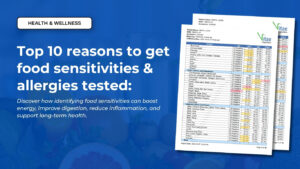
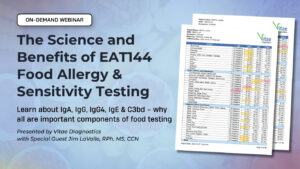
So today we're gonna talk about the links between food allergies and sensitivities and weight gain along with cardiometabolic syndromes and then the impact that EAT one forty four has on increasing accuracy for testing for a hundred and forty four antigens and five categories of immune response, including IgA, IgE, IgG, IgG four, and c three b d. This is Jim Malvow, academic co chair at the American Academy officer for a lifetime, founder of Metabolic Code Enterprises, and chair of the International Peptide Society. So the very first thing to understand when we talk about weight gain and cardiometabolic issues is that, you know, your metabolism is really kind of the sum total of all the metabolic reactions going on in your body that are driving, you know, not only how you feel today, but what's going on internally. And it's creating the chemistry of how you're gonna move forward in your future. And so, you know, this is key to understand that in the end, what we're really trying to do is reduce the inflammatory signaling that goes on within an individual. That's that metaplasmation process that, you know, is driven by exposures and stress and food decisions and drug therapies and overexercise, underexercise, all things that generate your metabolic health literally from the time you're in your mother's womb to today. And we need to understand those disruptors in order to, you know, gain a foothold on metabolic inflammation. One of those big disruptors is the gut barrier. So, you know, you have fifteen to twenty percent of adults have some type of food sensitivity or intolerance. True food allergies about four to five percent. So reactions can fall into, you know, various categories. One would be, obviously, IgE, a traditional food allergy, then non IgE immune sensitivity, IgG four, IgG, IgA. And that nonimmune tolerance can be due to a lot of reasons. You know? Enzyme deficiency, cystamine intolerance, you know, food, chemical additives, bile acid metabolism issues. Obviously, if you're not making enough bile acids, you erode the mucosal barrier. Could be things like FODMAP intolerance. It could be environmental exposure. Any number of things could drive this. Now common, you know, signs, you know, bloating, IBS, brain fog, fatigue, headaches, joint discomfort, skin issues, obviously reflux, you know, EOE. But more importantly, the long term risk of this chronic metabolic inflammation is cardiometabolic risk, weight gain, obesity, diabetes risk, any number of things that would be driven by inflammation, skin disorders. So, you know, once again, what can cause it? Well, a a few things, obviously. Chronic stress can lead to this. Chronic stress leads to elevations in aisle six. Aisle six upregulates claudin two. Claudin two causes the tight junctions to break, and now you have a permeable gut, which we'll show in just a minute. And, of course, the alterations in the microbiome, that occurs for any number of reasons. Lipopolysaccharide release or low grade endotoxemia, TMAO production. And, of course, once you're obese, you get an increase in inflammatory compounds known as adipokines. So, you know, when you look at metaplasmation and inflamaging, here you know, here's the thing. There's a there's a variety of things that drive inflammation signaling. And in a perfect world, what would happen is is that you would have an inflammation response. You trigger inflammation, and then the effect is that you eliminate the cause of the inflammation, the switch of inflammation gets turned off, and then you heal. Where the problem is is if you have chronic food intolerances, sensitivities, or allergies, you're if you're eating those foods, you're chronically triggering that inflammation. And that chronic inflammation signal starts to affect your chemistry on more global scale. So, for example, metabolic inflammation leads to more bad actor lipids, more oxidized LDL, apolipoprotein b production potentially driving l lipoprotein little whey production. You start to shut down growth hormone releasing hormones. So you lose your IGF one signaling that leads to muscle loss and sarcopenia. You can start to see changes in your iron and ferritin. So early phases of this would be, you know, high iron, low ferritin, and that's due to increases in hepcidin, reduction in ferroportin. Until you get poor iron absorption and recycling, EPO production's downregulated. And, of course, that leads to palpitations and fatigue. But as you continue to trigger that inflammation, that could actually lead to high ferritin, especially maybe with alcohol use. But as the inflammation signaling continues, you start to increase TNF alpha receptor one activation, toll receptor four, JAK kinases, IL six receptor activation, which turns down your insulin receptor one and insulin receptor two substrates. And that means you get less efficient insulin signaling, which leads to insulin resistance, which creates weight gain, can lead to diabetes. Obviously, once the inflammation signaling from an insulin resistance perspective occurs, more risk of cardiovascular disease, peripheral vascular disease, high blood pressure, you know, congestive heart failure, even dementia for that matter. But then there's other things that can also occur with that as well. So with that increase in an in TNF alpha and IL six, IL one beta, you increase your osteoclasts, you decrease your osteocalcin, that leads to brittle bones. And then if you continue down the funnel of this meta inflammatory process, which happens over a lifetime, you're reducing neurogenesis and neurogenic growth factors, and you're decreasing cell plasticity. You're decreasing efficiency of your neurons, and you're increasing neuronal inflammation that leads to, you know, slower processing, foggy brain, anxiety, mood disorders, all sorts of things that have been correlated to actually, to directly to food sensitivity and allergies. And then as you go to the bottom of that funnel, obviously, you see mitochondrial dysfunction, which is, you know, honestly, at the literally at the cellular level, this is what's triggering aging. Right? You lose energy production. You damage DNA. You trigger more cytokine storms. So it's really important to figure out, well, how do we start to shut down any aspect of inflammation? The one thing that people need to do every day is eat. You know, they could choose to take an herb. They can choose to overtrain. Maybe they can choose to be exposed to something, maybe not. But the one thing that they always are gonna do is eat. And if you're eating foods on a regular basis that are triggering inflammatory signaling, you're pushing down this funnel towards cellular mitochondrial disruption and damage to your DNA and really inducing something known as the Warburg effect, which, you know, obviously is related to cancer. But in the early stages, that's how diabetics make energy in their cells. So, you know, gut health, super important because, as I said, everyone needs to eat. So when you think of cardiometabolic health, gut barrier disruption's been associated with it, immune signaling or kind of a hypervigilant immune system or an inflammatory immune system, metabolic dysregulation, meaning poor signaling or cell to cell to cell communication, and that chronic low grade inflammation leads to, you know, plaqueing of the arteries, more stiffness of the arteries, and, you know, and and as well as eventually even, you know, enlarging your left ventricle, for example. So all of all of this is important because we have to develop a plan. Right? So the plan is how do we start to neutralize, for example, gut dysbiosis and intestinal permeability? Well, you have to be able to reduce those reactive foods that cause gut barrier distress that leads to lipopolysaccharide endotoxemia that leads to systemic inflammation, insulin resistance, weight gain, and eventually heart disease. And, you know, the downstream effects of this are pretty striking. You get a reduction in short chain fatty acid production, so you make less butyrate. You end up making more inflammatory metabolites like creosol, phenols, and trimethylamine oxide or TMAO. Increased hunger signaling because of ghrelin dysregulation and lepin resistance. You get reduced satiety hormones like GLP one and PYY. And, of course, as GLP one gets reduced and your glucagon is unopposed, you start storing fat and can't get to it. And, obviously, you know, this alteration in the microbiome I mean, look. The first thousand days of life are probably the most important. Right? We've all kinda seen the recent studies that have published on that, and a lot of people are leaning into that. But we know that in early life, the more antibiotic intake, the more synthetic chemicals, the skewing of the diet, the altering of the microbiome associated with development of food allergies, but even after that, allergies, asthma, eczema, autoimmunity. Right? That's kind of the progression. And so what actually happens is you get more IgE expression, more pro inflammatory cytokines. You get a reduction in your anti inflammatory cytokines. You inhibit the accumulation of your of your reg Treg cells, and, of course, you suppress the tolerogenic CD cells. So, basically, the earlier we see these disruptions and more and more children are, you know, at early ages have food allergy sensitivities, eosinophilic esophagitis, lots of issues around that. And this is kind of that healthy gut versus not a healthy gut. If you look at, you know, a on the left hand side, obviously, a velvety smooth intestinal lining. And then if you look underneath it, b is the, you know, the brush border, which is very tight, so things can't get through there very easily. There's a, you know, elegant way that things get absorbed. And then there's over on the right hand side where this is in, you know, ulcerative colitis, inflammatory bowel disease, and then colorectal cancers. And, you know, and so this is a a leaky or permeable gut. And you can see first the lining of the gut is, you know, isn't as integris. And then, indeed, you see that the brush border is broken down, and that's going to allow, for antigen presenting cells, peptides from food, and the development of allergies and sensitivities as those things enter into the bloodstream and then, get attached to those antigen presenting cells. So the gut's a huge source of inflammation. You know, when a gut's permeable, bacterial toxins enter the blood and can enter the bloodstream. So things like lipopolysaccharide can circulate. You get more immune activation. And because of the permeability of the gut and the lack of breakdown of foods in many cases, you end up presenting peptides from foods that create a sensitivity as well. And this is just a graphic depiction of it. Right? You get a you get a permeable gut. It hits the antigen presenting cells. Th two cells then start to spin up their cytokines. And the net of it is is that you make an epitope. And in this case, they're make it that's a IgE epitope, which increases mast cell activation. Basophils start to go up. Hence, you should be looking at basophils once they get one or greater. You'd know that this is probably at least moderately activated. And then this leads, of course, to the release of histamines and cytokines along with activating eosinophils. Right? And so and this can be from food or this can be from an allergen. This could be environmental. You know? And then, of course, there's this whole aspect of, you know, high FODMAP foods or foods that tend to trigger with permeability problems, you know, mast cells and eosinophilic response and, you know, water retention, you know you know, excess fermentation in the colon, you know, short chain fatty acids get depleted. And as your short chain fatty acids are depleted and you're making me more TMAO because of your diet, maybe you're eating more meat while how all this is going on, you lose your mucosal barrier. And when you lose your mucosal barrier, you're going to increase food intolerance and sensitivity. And this is kind of that full thought that is you know, this was, you know, oxidative medicine and cellular longevity in two thousand twenty one. Dysbiosis leaky gut, lipopolysaccharide with the end result being insulin resistance. So, you know, as lipopolysaccharide gets upregulated in the gut, it can cross the blood brain barrier, can activate the microglia in the brain That can lead to more NF kappa B and TNF alpha expression. It can lead also to increasing the the resistance at the insulin receptor level. And then, of course, when you look at the gut and the lipopolysaccharide expression, it can affect the beta cells, and you can start to damage the beta cells. And at the same time, that lipopolysaccharide starts to activate those m one macrophages, which leads to kind of systemic inflammation. Right? So so this process of trying to repair the gut, I just look at most people that are either prediabetic or or people with diabetes already. Ninety nine percent chance that gut's permeable. And here's a great picture. If you look at the picture B and D, these are basically immunoperoxidase stainings of people with type two diabetes, and it's basically showing the inflammation signaling that's occurring in the type two diabetic's gut versus the control, which is healthy. So by default, the the person that's, you know, type person with type two diabetes or insulin resistant, their their gut's already inflamed and on fire. And think of how many people are on GLP ones and how many people are gonna be put on GLP ones. Yes. That might help to turn on that, you know, the GLP one and and the inhibition of glucagon. But at the same time, if you're not correcting the gut, you may not be getting the full metabolic resort results you're looking for that are gratifying. So, you know, why metaflammation? I mentioned this at the introduction. It's because of everything. Right? It's medications. It's stress. It's diet. It's alcohol. It's accidents, training, overexercising, environmental burden, production of lipopolysaccharide, accidents, you name it. You know? In general, it's all things that do not get reset end up leading us down this path of inflammatory signaling. And so, you know, what's the consequences? Well, you know, literally, for most major conditions, food allergies and sensitivities can, you know, play a role in it. And, you know, I think it's important to realize that it's ground zero. Like I said, everybody has to eat eat foods that don't trigger inflammation. And this whole gut heart axis is really important because it's the balance of the sympathetic nervous system and parasympathetic nervous system and your vagal tones. So when you're looking at heart rate variability, is it good? Is it bad? When you have low butyrate, the TMO pathway is upregulated, and that trimethylamine oxide, it does two things. One, it increases the kinda atherosclerosis processing. Right? And, you know, so really a, you know, a major driver with that. And, of course, when the short chain fatty acids are low, you're also eroding the mucosal barrier. And then endotoxin, you know, lipopolysaccharide, you know, bacteria die off in the gut, release lipopolysaccharide, and typically supposed to be filtered out by the liver, by the lymph. It gets overwhelmed, and now we have circulating lipopolysaccharide, which leads to, you know, more increase in intestinal permeability, vascular inflammation, neurovascular inflammation, endothelial dysfunction, so stiffness in the arteries as well, as well as plaquing. So increases all aspects of, you know, cardiometabolic disease. And, you know, you really wanna think about that interconnection of the systems of systems. Where's the stress out? Where's the HPA axis? Is their gut broken? If you're if you're chronically stressed out and you're sympathetic dominant, chances are your gut barrier is going to be damaged. Right? Because you need when you're sympathetic dominant, you're, you know, you're releasing more catecholamines. You're also releasing more cortisol, all of which can have an effect on, you know, gut permeability and motility. So this goes all the way through to, you know, what's going on in your fat, what's happening with vascular inflammation, what's happening to your mitochondrial energetics, and then, of course, neurohormonal signaling. You know, it could be just based on age for that matter. Right? So it's that loss of vigilance as we're aging in terms of our hormones. And so when you really look at this, you know, cardiometabolic syndrome is this convergence of, you know, insulin resistance, visceral fat, dyslipidemia, endothelial dysfunction, low grade inflammation, you know, you know, weight gain, and that progression from metabolic syndrome is obviously full blown, you know, cardiovascular disease, type two diabetes, fatty liver, which is obviously epidemic, as well as that neurovascular decline, meaning I lose heart rate variability, my resting heart rate's going up, my two minute heart rate recovery is poor, you know, all signs that there's this cardiometabolic issue in play. So TMAO, trimethylamine oxide, processed through the liver, especially, you know, things like red meats and eggs, that leads to endothelial dysfunction. And then if you have a chronic low grade infection or maybe you're a SIBO person or something like that or you just have dysbiotic flora, That's gonna trigger more zonulin. Zonulin ends up causing the tight junctions to break. And when those tight junctions break, more lipopolysaccharide gets into circulation. So it's kind of a a vicious cycle that leads to cardiometabolic syndrome. And this is the Journal of Food and Nutrition Research two thousand nineteen. Just kinda laid this laid this out. There's a a huge food gut heart connection. It's a two thousand seven study on thirty obese children versus thirty normal weight. You know? And the question was, do IgG antibodies increase the risk of vascular inflammation and atherogenesis? And it and the results, you know, obese juveniles compared to normal weight reported significantly higher increase in intimal medial thickness, elevated CRP, and higher anti food IgG antibody concentrations. So the author's conclusion, pretty clear. IgG food antibodies positively associated with minimal medial thickness of the carotid arteries in obese juveniles and associated with increased risk of atherosclerosis. This was back in, you know, two thousand and eight. And yet at the same time, we're not really getting this information, you know, to families, to individuals, for the children to be able to help managing this. So childhood obesity, a big one because the dipokines end up creating inflammatory signaling, which can lead to the permeability of the gut. And we know the chronic exposure to those reactive foods activates the immune system. So when you activate the immune system, you increase inflammatory cytokines, disrupts your insulin receptor, increases fat storage, decreases lipolysis. Well, you look at how many people in our country's obese. You look at how many people in the country have diabetes and insulin resistance. It's no re no. It just stands to reason because how many people are eating foods that are, you know, laden with food additives. Or maybe they've taken multiple rounds of drugs that disrupt the microbiome throughout their lifetime, or just poor selection of food. Could be high stress. Could be low sleep. Could be both. Could even be somebody who looks pretty fit, but they overtrain. They train too much. So, basically, the key effects from this and this is pediatric allergy and immunology once again back in two thousand and eight. You get the promotion of visceral fat. You create chronic low grade inflammation, which favors abdominal obesity, and it reduces metabolic flexibility in individuals. And, look, this is epidemic. We're seeing this everywhere. Two thousand nineteen study, controlled trial, body mass indexes were greater than twenty. Three month study. The intervention was IgG based elimination diet up to ten foods, a wait list, no health coaching, or IgG test results. The intervention group reduced BMI and waist circumference, significant improvement in sleep versus the wait list group. That makes a lot of sense because you're making a lot less histamine, and we know that histamine drives up that mind alertness at bedtime. So the IgG antibody concentrations decreased eighty three percent of the targeted foods in the intervention group and then sixty percent in the foods in the weightless group. Another two thousand sixteen study, eighty two people randomized on elimination diet. Diets were fifty eight percent carbs, thirteen protein, twenty nine fat, And the elimination group lost eight point six kilos in six months, five kilograms of body fat, so with a slight reduction in glucose, cholesterol, LDL. The calorie restricted group lost one kilogram in six months, and their fasting glucose went up. And, you know, they did have a slight reduction in their total cholesterol and trigs, but calorie restricted. So in the end, insulin resistance is the number one metabolic factor for having people be overweight or obese. Right? We can see that now. The issue is that if all we do is look at diet and we don't look at how to repair the inflammation cycle in the body, we can't get where we need to be. And, you know, these are just, you know, studies showing that, you know, diabetes is rampant. This is basically when you are making a lot of lipopolysaccharide because of that broken down gut barrier. You trigger brain inflammation, angliosis. The HPA axis goes into allostatic load. That leads to, you know, gaining weight, you know, becoming obese. Common food triggers, obviously, gluten, dairy, corn, soy, eggs. Those are the biggies. Right? Shellfish would be another one. But the reality is is that people become more and more sensitive to more and more foods in these various categories. So hence the need for looking at testing. So on elimination protocols, there was a reduction in CRP, TNF alpha, and IL six. Fasting glucose got better. Visceral fat went down. The improved leptin to adiponectin ratio occurred. So adiponectin being the compound your body makes to make the you know, your insulin receptors work, and it acts as an antioxidant. And, obviously, leptin, you know, helps us with our satiety, but you get you gain that leptin resistance. So there's an improvement in that signaling. And that'll reduce triglycerides and improve HDL, and they also lost weight around their waist. So let's look at what's tested. So, obviously, you know, IgE, IgG, IgG four, which is the it's the epitope that's keeping you from going to IgE. Right? So it has a kind of a blocker for IgE. And then, of course, there's complement immune system, which runs independent. But when it gets activated, it makes your other immune markers like IgG become much more reactive. And, of course, your secretory IgA. So the first thing when you look at EAT one forty four, it's a microarray test versus an ELISA test. Why? It's got a better sensitivity and a greater dynamic range. It's more stable. You get more reliability. There's less sample consumption and waste, which is, I think, always, you know, significant to be thinking of. So in the end, a microarray test creates more sensitivity. You know? And these are the things that we test. Right? We look at antibody response. That's IgE. I g g four is the complement to IgE. So remember, if you're mounting an IgG four response, it's because it's sparing you from that IgE response. But the the issue there is that if IgG four is going up, it can contribute to development of autoimmunity. And, you know, it serves as an indicator for allergen exposure. Right? You you know, I g g four, you know, comprises about four percent of IgG antibodies. So it it really is helping to reduce serious reactions, but at the same time, it comes at a cost. So if you have a lot of IgG fours, you can push yourself to be more prone to eventually to autoimmunity. Now, of course, IgG, that reaction can take up to seventy two hours to express. So that's something that a lot of times people don't realize that, gee, I ate this three days ago. This is why I'm achy or foggy headed, you know, two days later or three days later. And, you know, once again, people will say, oh, IgG is just a food you eat all the time. Yeah. But if you're reacting to them, you're creating more low grade inflammation. And then, of course, the c three complement, it it really is stands on its own is is the, you know, complement immune response, but it amplifies the IgG presence. And, you know, secretory IgA or the IgA testing, it's what's going on in your gut. So, you know, it's IgA secreted in your gut. It's supposed to protect your gut. But the problem is is when it goes too high, that means you're in the throes of an inflammation response. And when it's really low, that mean you've worn out your inflammation response. There's a lot of different indicators. So, you know, if your IgA is low or exceedingly high, that could mean it's due to chronic stress. It's due to bad bugs, candida, increased intestinal permeability. Any number of things can lead to that IgA response being elevated, which, you know, when you have IgA elevation, chances are the gut's gonna be breaking down. So what do we need to do? Well, obviously, address the triggers. How are gonna do that? Through testing. Wanna clean up any kind of unfriendly bugs. You have to look for environmental exposures like mold and smoke and, you know, environmental burden, Lyme. Any number of things can trigger that. And then, of course, it's the loss of circadian cortisol or having a flat line of high cortisol. Right? So your body's supposed to make a lot of cortisol in the morning and drop at noon, drop at five, go to nothing at bedtime. When you start to flatten that curve out, it's much more oriented to chronic inflammatory signaling. So you can remove a food. I usually say remove it for three months, and then try to add one in at a time in order to see, hey. Do I react in seventy two hours? Did I get a rash? Did I get achy? You know? What is it that I felt? I feel like I was holding water for three days. Right? So with with high IgA, you need to work on gut repair. So things like glutamine and zincarnosine, omega threes, probiotics, reduce inflammation. That could be, you know, curcumin. Obviously, be on an anti inflammatory diet. And then if it's stress related, you gotta do some stress management. Even if it's just box breathing to get the nervous system system back under, you know, control from pair from sympathetic dominance to parasympathetic balance, that can go a long way. So, you know, IgA reactive foods are really kind of a, you know, a great because it, you know, really shows how chronic their reaction is in their gut. And if you have low IgA, it means that, typically, that the mucosal barrier has been depleted. That could be due to a lot of different things, medications, damage to the gut, you know, immune exhaustion, malnutrition, chronic stress, overtraining. Any of those can lead to that. And the goal is how do we rebuild that mucosal immunity and barrier, Create strength in the barrier of the intestine. And so you're gonna think of the same thing. You wanna rule out IgA deficiency if it's very low. Assessing nutrient status, pretty important. You know, protein, zinc, a, you know, real very important. And then, you know, and you gotta realize there's certain drugs out there that are depleting these things. So you also wanna screen if they've got low secretory IgA for chronic infection because they could easily have something picked up a bug somewhere traveling or just, you know, have have hostile territory inside their gut. So, you know, you wanna have adequate protein on board. I'd say, you know, you need to take butyrate or take glutamine, but you wanna help build the mucosal barrier for endopeptides, b p c one fifty seven. Zinc is essential. And then if you wanna strengthen that mucosal defense, you can think of colostrum, serum bovine compounds, so the you know, immunoglobulin support. And then, you know, medicinal mushrooms can do a great job too. So high IgA, overstimulation or active immune battle. Low, weak barrier, poor defense. That's why we wanna try to get somewhere in the middle in terms of at least this. And then the c three b d, why is that important? Mainly because it amplifies the response, and more and more people are coming up with these c three b d exposures. You know, their immune system is really driving this, And it's you know, it promotes proallergenic function in the, you know, in the tissues. It also drives t h two immunity, which can be correlated to a pro inflammatory potentially driving someone to an autoimmune type of behavior. So, you know, what you know, t three BD is there for a reason. It keeps the cascade for immune response on high alert. So it fuels that amplification, and that amplification increases the impact of the other sensitivities, especially IgG. And this is that whole piece of, you know, c three b d. If you look, we've got danger sensing. This is a microbes, you know, altered self, right, and inflammation, And our immune response from our c three cells is to make these various compounds that lead to chronic inflammation. But once you're making more of these, you also start to react to more of these. You build you build your immune system up on these excessive c three b and three d activities. So here's the test. If you look at this test, this is the EAT one forty four, and what it's doing is it's showing you what areas are you reactive in. So the IgE, you could see here this person's very, very sensitive. And when you look at milk and yogurt cultures, IgG four was up. They're they're, you know, they're developing a very strong inflammatory response when they eat basically, it looks like almost all milk, goat, cow, has a little bit of a trigger. And then if you look here, you know, this is the, you know, basically, the red list. Here is, you know, kinda transient, the yellow, and then here is the good list of foods. So, you know, this is what your you know, our goal is is to try to really figure out what are you reacting to. If you see here, once again, hundred and forty four different foods, lots of green foods that you can pick from. So anything in the green, you can tell people, yeah. You can eat these pretty fairly liberally versus the yellow foods, which may be giving you some insight. Right? Candida showing up all the milks and the, you know, overall in the yellow, but you also have all these other compounds that they're reacting to. And then if you go to the to the right, you see the reactivity of secretory IgA. So you can look at that dairy and see that, you know, the mucosal barrier is not happy when this person's taking in dairy. And this just kinda goes through, once again, all the foods secretory IgA style, that you would also wanna consider getting them off of. Here, you even notice you have bovine immunoglobulins, bovine serum albumin, lamb, pork, venison in elk. You really get a very comprehensive evaluation of what's reacting. It's simple to read. And then, of course, there's some environmental ones that also show up in the test as well. You can see that it's, you know, the most common environmental allergens. So when you get a Vitae diagnostics test, the EAT one forty four test, a, you're getting a more accurate test due to the microarray testing. B, you're getting, you know, five categories of of food sensitivities and and allergies. And then it gives people a really easy map that they can follow, like eat foods in the green. Maybe have some of the foods in the yellow show up every once in a while. Right? You can have them every once in a while unless you feel them. So, you know, obviously, we talked a lot about this. People should be on fiber. People should be on a probiotic, especially if they're having digestive stress or trying to heal their gut. And if they're bloated and gassy, they eat and they're not making enough digestive enzymes, you know, make sure they're on an enzyme. If their differentials are high, you know, meaning, you know, their monocyte t, eosinophil, basophil percent is significant, like fifteen, you're gonna wanna kill some bad bugs. So killing the bad bugs, look. You can use, you know, berberine, cat's claw, grapefruit seed extract. You can use olive leaf, oregano, thyme, biocidin. Any number of things will kill off bad flora. And then if there's a parasite component, you may need to use, like, a liposomal EGCG. I'm I'm sorry. A viral component, not a parasite component. So if there's evidence of irritable bowel, then you think of right away glutamine, zinc carnosine, DGL licorice, aloe, marshmallow. You can get those in powders half to one scoop twice a day. If you're into using peptides right now, you could still get oral B and KBV, but it's you know, we'll we'll know more as as we see how this legislates out on our ability to use these things. But you could do BPC and KPV orally, either five hundred micrograms each, or if you're doing the oral liposome tablet, you could do two hundred and fifty micrograms each. And then, of course, KPV, a three amino acid peptide that has dramatic effect on gut permeability because it d because it decreases TNF alpha signaling. And then, of course, lorazotide helps with down regulating zonulin. So BPC, what's the big benefit? Gastric protection, mucosal barrier repair for the purposes of this talk. Helps support connective tissues. Obviously, people take it when they're athletes and they're sore and achy, but not athletes who get tested. It's got anti ulcer, effects. It's cytoprotective. The nitric oxide part is important because you get more blood flow to the gut in order to heal it. And then, of course, you know, it improves the integrity of the GI mucosa. And that's why BPC, I think, has been so popular. People feel better on it. They absorb their nutrients better. Right? You get the inflammation out of that gut lining and, get your mucosal barrier back, and you can start to absorb nutrients correctly. Typical dosing, two hundred and fifty micrograms to five hundred micrograms. You know, there's liposome solid state. You could do that, or you could just do a capsule. Corticosteroids, if you're on a corticosteroid, you should probably be on BPC because we know that that has a kind of a drying effect on tendons and ligaments. It's good in the moment to help people get out of pain, but you wouldn't want them being reliant on cortisone, all the time. Right? So the cortis corticosteroids. Typical dosing if if it is available, three hundred to six hundred micrograms daily. I have a feeling it's gonna get available here shortly, but for now, not available sub q for human use. You know, the big controversy was it was that BPC somehow is, you know, has angiogenesis properties that would feed a cancer cell? Two thousand twenty five review of all the literature and patent review and the and the the publication in pharmas in pharmaceuticals in two thousand twenty five basically says that the increase in nitric oxide, it actually helps with both angiogenesis, meaning it's selective angiogenesis. So it modulates angiogenesis and the nitric oxide system. It increases it where it needs to, decreases where it's need to. There's no human clinical evidence that it causes. BPC one fifty seven causes cancer. There's also no human safety data providing, of course, that it does not promote cancer, but there's nothing really there that is been published that really makes you think, oh, I have to avoid BPC, but that's what's in the literature. A lot of a lot of folks, you know, take in from information from the past still say that. So KPV, this is kind of one of my favorite peptides. It's only three amino acids long. It immunomodulates the mucosal barrier of the gut. It suppresses TNF alpha, which is fantastic. You think a lot of people that are, you know, getting put on, you know, you know, biologics. This is kind of a biologic that you don't get accustomed or resistant to. So it also stops pro inflammatory mechanisms inside the epithelial cells and helps to regulate immune cell regulation. So a really significant peptide. And it's, you know, it's derived from melanocortin, which is produced in your brain. So you don't get any pigment activity from it even though it's, you know, kinda coming from, you know, melanocyte stimulating hormone. You can either chew this up or you could get an oral capsule. So you can get a liposomal tablet, chew up one twice a day. I usually have people do two twice a day for the first bottle, then I cut them down to one twice a day. And this whole aspect of TNF alpha by regulating TNF alpha, you're protecting against the increase in zonulin. So if you look on the left, zonulin goes down, occludin goes down, pore forming collodens go up, better paracellular permeability, which means we're gonna improve delivery of nutrients into cells. So KPV, I think, is gonna gain tremendous applicability once we get through this little bit of a a legal hiccup that I think we'll be we'll be seeing clearance on it pretty soon. Lorazotide. Once again, lorazotide look. The main benefit of lorazotide is that it lowers zonulin and the tight junctions get tight, and now you're not having adverse reactions to food. This was first developed for celiac patients. Right? Because even small amounts can trigger them. So, you know, lorazotide, is a phenomenal peptide because, you know, it basically is down regulating that zonulin very directly, which is allowing for those tight junctions to heal and and create integrity again. And this same thing, zonulin receptors, you know, when the lorazotide blocks those zonulin receptors from from activating, which keeps the tight junctions intact and reduces permeability problems from foods as well as bacterial translocation. All that stuff goes down. And this was basically a study of looking at lorazotide either at a half, one, or two milligrams three times a day. We typically do a half milligram twice a day and combined it with when we were doing it with b p c one fifty seven, That was great and KPV. So, you know, these patients were on a gluten free diet for twelve months, included a four week placebo run-in, twelve weeks lorazotide, four weeks placebo washout. Primary endpoint, pretty interesting. Twenty six percent less symptoms, thirty one percent improved symptom days. So I get symptoms less. I don't trigger my incidental exposure as much. And decrease in non GI symptoms, so fatigue, headaches, all mitochondrial problems, you know, went down because of that decrease in global inflammation. Typically, a half milligram three times a day is enough. So that's the thought process behind cardiometabolic risk, triggering metabolic inflammation, and the gut being a source of that metabolic inflammation. And I hope you found this of value. Obviously, the EAT one forty four test, It also has, you know, something. It's a carbohydrate blocking molecule that blocks false IgEs. And then the third comp component is is it also helps in terms of accuracy because they use concentrates. So it's a much more refined signal that you get for the test. So whenever you're seeing that person on a GLP one, I want you to think gut. When they're insulin resistant, think gut. When they're marathon runners and overtrained, think gut. Virtually everybody can benefit from it. So thank you. Appreciate your time.